
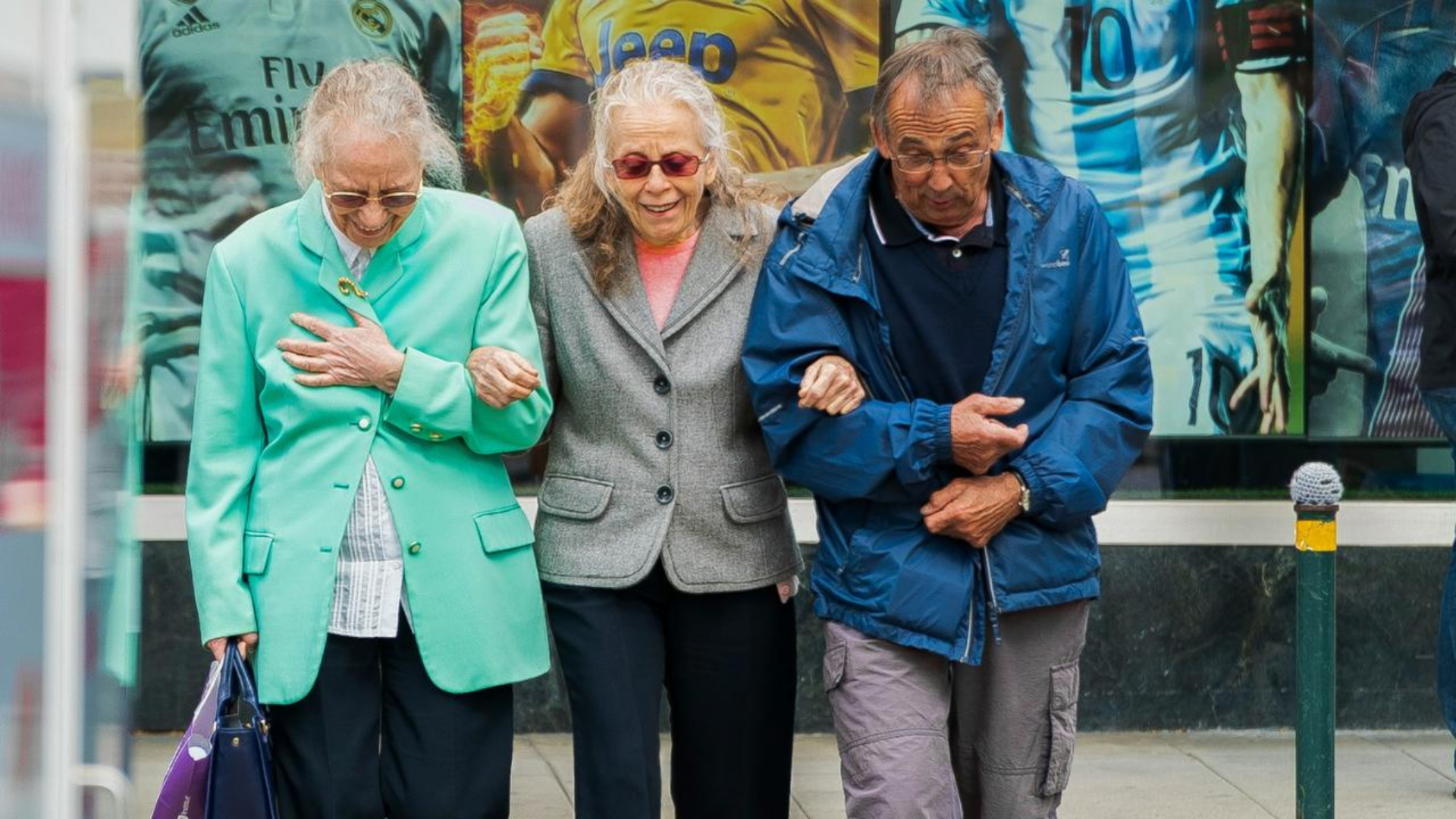
New Zealand’s population is ageing rapidly. A recent report says around 17% of the population is over 65 and by 2078, up to one third of the population may be 65 or older.
While this increasing life expectancy is a positive story, the report, Age-proofing Aotearoa: rethinking our infrastructure for an ageing population notes the demographic change also poses urgent challenges for infrastructure, health systems, housing, and social services.
What can local Baptist churches do to accommodate the change?
We asked a theologian, an academic and a retired pastor to read the executive summary of the report, released by the Helen Clark Foundation, and through their respective lenses answer two questions.
Greg Liston, Senior Lecturer – Theology, Laidlaw College, Auckland
What could Baptist churches in New Zealand take on board from this report?
Baptist churches should see an ageing population as a Gospel opportunity to model an alternative society—where older adults are honoured, included, and empowered. In a culture that often marginalizes the elderly, churches can demonstrate what life under God’s reign looks like: intergenerational community, mutual care, and sacrificial love. Preparing for demographic shifts means reimagining ministry so outsiders see a people living counterculturally in Christlike unity.
How should a local church respond to this information?
Local churches could create age-friendly spaces and foster deep intergenerational relationships that reflect God’s kingdom. By caring for the vulnerable, equipping seniors for mission, and partnering in the community, the church becomes a visible alternative society—where belonging, dignity, and hope are offered freely. Strategic planning for an ageing congregation helps enable our life together to proclaim the Gospel to a watching world.
Darcy Halliday, retired pastor, Auckland
What could Baptist churches in New Zealand take on board from this report?
The ‘silver bullet’ many are looking for can best be addressed by remembering the genius of the Baptist belief that the local community of faith has the opportunity, and the obligation, to make sense of its faith to its local community.
We believe that we are the people of God (Colossians 3: 12) and our mission, and ministry, is to witness to the saving love of God. We do that in the name of Christ and in the power of the Holy Spirit (Acts 1: 8).
As the people of God, the local church gathered to witness and worship, we don’t silo members, the older ones as the ‘church of the past’ or the younger ones as the ‘church of the future’, we believe and practice that the local gathered community is the Church now. We allow no silos, no divisions in the body, “there is no difference between Jews and Gentiles, between slaves and free people, between men and women; you are all one in union with Christ Jesus” (Galatians 3: 28).
How should a local church respond to this information?
In a fragmented, confusing world we will behave as Jesus instructed, we will love each other (Matthew 13: 34 – 35) in real and practical ways, and we will follow his commission to the disciples on the day of his resurrection – “as the Father sent me, so I send you. Receive the Holy Spirit!” (John 20: 21 – 22).
The prophet Micah states, “the LORD has told us what is good. What he requires of us is this: to do what is just, to show constant love, and to live in humble fellowship with our God” (6: 8), and the Psalmist writes “How excellent are the LORD's faithful people! My greatest pleasure is to be with them” (Psalm 16: 3). As we, the local community of faith, act in obedience to what we believe God is calling us to we discover over and over again that we are not alone and we are not impotent.
Andrew Reyngoud, academic, Hawkes Bay
What could Baptist churches in New Zealand take on board from this report?
NZ Baptists are at the forefront of this demographic change, with the 2023 census showing that over 34% of NZ Baptists are 65 or older. This means that “enabling all older people to age with dignity, independence, and connection” is both a challenge for the communities we live in and for the church families we are part of.
How should a local church respond to this information?
Questions that a local church could ask itself include:
· How are the over 65’s in our church family getting on?
· Is our church an age friendly environment?
· How are we maintaining connection with those who are no longer able to attend?
· What sort of needs do the over 65’s in our community have?
· What has God gifted us with in terms of skills and resources, that matches with these needs?
Image credit: Photo by Philippe Leone on Unsplash


